
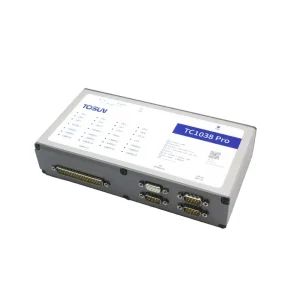
TC1038Pro – 12 CAN FD/LIN bus analyzer
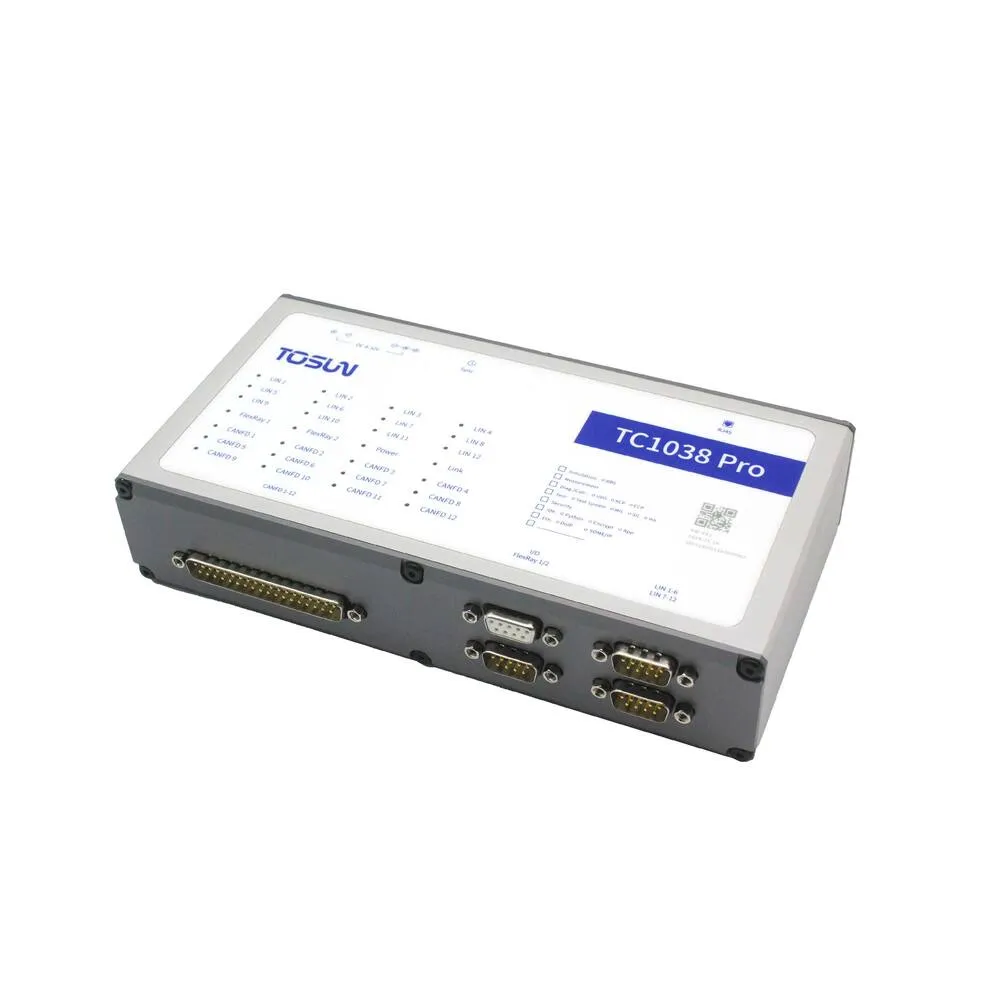
The TC1038 Pro is a multi-bus simulation and testing tool, supporting CAN/CAN FD, LIN buses. It features 12 CAN/CAN FD channels with adjustable baud rates from 125 kbps to 1 Mbps for CAN and up to 8 Mbps for CAN FD. The 12 LIN channels can be configured as master or slave nodes via software, supporting baud rates from 0 to 20 kbps.
- ARM64 Linux: tsdev
- HarmonyOS: tsdev

Related Products
Related products
TC1038Pro Functions and parameters
TC1038 Pro connects to a PC via Ethernet, ensuring high data transmission speed and preventing communication bottlenecks when handling large volumes of bus data. It features a driverless design for Windows, offering excellent system compatibility.
With the powerful TSMaster software, it supports loading DBC, LDF, ARXML, and Fibex database files, making it easy to monitor, analyze, and simulate vehicle bus data. It also supports UDS diagnostics, ECU flashing, and CCP/XCP calibration.
It features API support for Windows and Linux, compatible with various development environments such as C++, C#, LabView, and Python, making integration into various testing systems efficient and user-friendly.
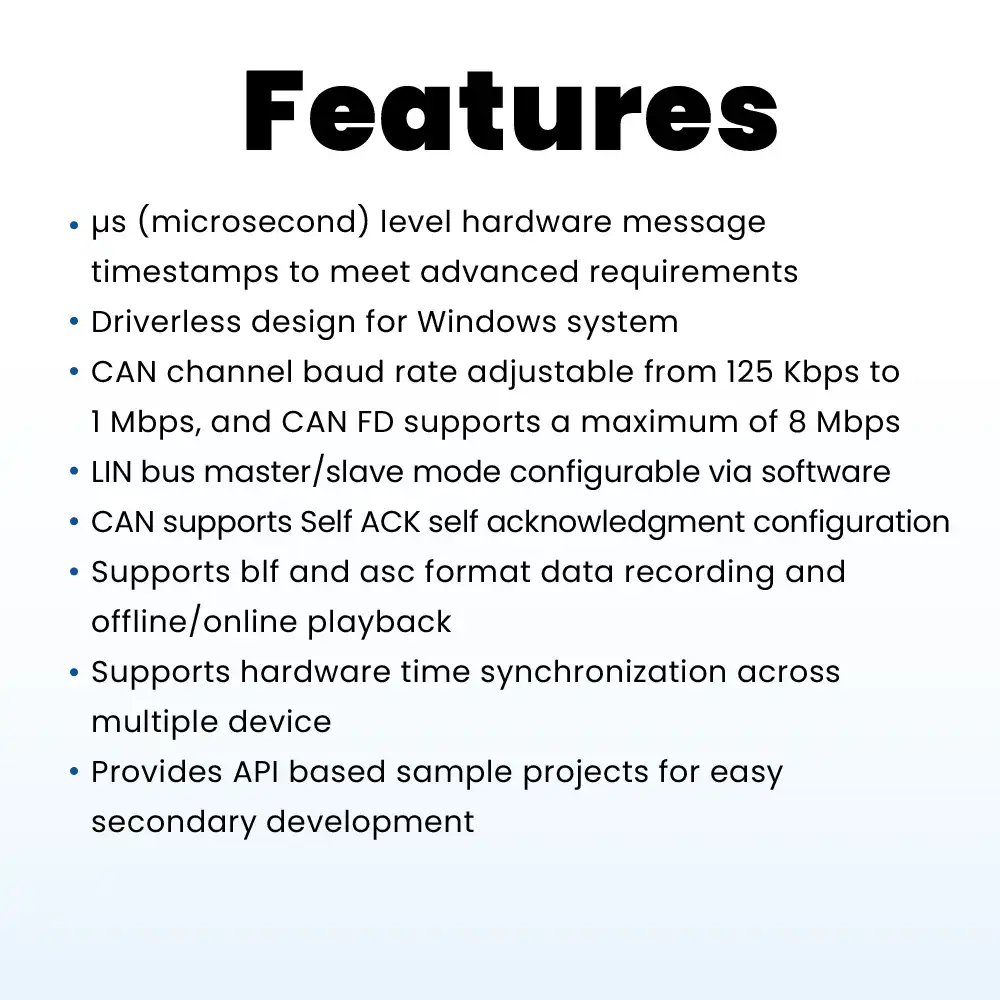
- Microsecond-level hardware message timestamps to meet advanced requirements
- Driverless design for Windows system
- 12 CAN/CAN FD channels, 12 LIN channels
- Supports DIDO *4 and AIAO *3
- CAN channel baud rate adjustable from 125kbps-1Mbps, and CAN FD supports a maximum of 8Mbps
- LIN bus master/slave mode configurable via software
- Built-in 120-ohm terminal resistor for CAN, with the resistance value configurable through software
- CAN supports Self-ACK self-acknowledgment configuration
- Supports blf and asc format data recording and offline/online playback
- Supports hardware time synchronization across multiple device
- Provides API-based sample projects for easy secondary development
Typical applications
- Multi-Channel CAN/LIN/FlexRay Interface for Data Acquisition
- Domain controller testing
- Various automated testing systems
- Bench testing and calibration
Specification
| channel | 12 x CAN FD / 12 x LIN / 2 x FlexRay / 4 x DIDO / 3 x AIAO |
|---|---|
| PC End | RJ45 |
| CAN End | DB37 male connector (comes with DB37 to 12 DB9 adapter cable) |
| LIN End | DB9 male connector |
| I/O End | DB9 female connector |
| Driver | Driver-free design for Windows system, with excellent system compatibility |
| Buffer | Each channel supports a transmit buffer of up to 1000 CAN frames |
| CAN | Supports CAN2.0A and B protocols, compliant with ISO11898-1 standard, baud rate 125Kbps—1Mbps |
| CAN FD | Supports both ISO and non-ISO standards for CAN FD, baud rate 125Kbps—8Mbps |
| LIN | Supports LIN 1.3/2.0/2.1/J2602 , baud rate 0~20Kbps |
| Timestamp | 1μs hardware message timestamp |
| Terminal Resistor | Built-in 120-ohm terminal resistor for CAN, configurable via software Built-in 100-ohm terminal resistor for FlexRay, configurable via software |
| Isolation | DC2500V isolation for CAN/FlexRay channels |
| DIDO | DI: 0-40V, Vref: 0-3.3V DO: Low level 0V, high level 5V/12V (not suitable for load-bearing use) |
| AIAO | AI: 0-40V, AO: 0-30V |
| Power Supply | DC 9-28V, power consumption 10W @ 12V |
| Operating Temperature | -40℃~80℃ |
| Casing Material | Metal |
| Dimensions | 210 x 118 x 47mm |
During operation, make sure to correctly connect the power lines and avoid frequent plugging and unplugging.